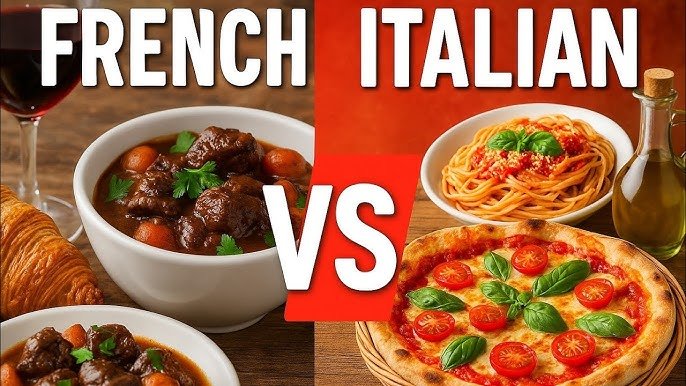
The culinary world has long been divided by a delicious rivalry: French vs. Italian gastronomy. While both nations claim the throne of European cooking, they offer vastly different philosophies on the plate. France is often celebrated for its technical precision and luxurious sauces, while Italy wins hearts with its focus on high-quality, seasonal ingredients and rustic simplicity. Whether you are a fan of a delicate Coq au Vin or a robust Plate of Carbonara, understanding the nuances between these two powerhouses is essential for any food lover. Let’s dive into the flavors, techniques, and cultural impacts that define these legendary cuisines.
1. The Philosophy of Simplicity
Italian cuisine is built on the “less is more” principle. Most traditional dishes require only four to eight ingredients. The goal is to let the natural flavor of the produce shine without masking it, making quality sourcing the most critical step in Italian cooking.
2. The Art of Technique
French cooking is the bedrock of professional culinary education. It prioritizes complex techniques like flambéing, poaching, and braising. For the French, the process of cooking is just as important as the ingredients, resulting in highly refined and consistent dishes.
3. Mother Sauces of France
France revolutionized dining by codifying the five “Mother Sauces”: Béchamel, Velouté, Espagnole, Sauce Tomate, and Hollandaise. These bases serve as the starting point for thousands of other recipes, showcasing the architectural depth and creamy textures characteristic of French fine dining.
4. Regional Diversity in Italy
From the buttery risottos of Lombardy to the spicy pasta of Sicily, Italian food is intensely regional. Each town often has its own specific shape of pasta or variety of cheese, reflecting a fierce local pride that has remained unchanged for centuries.
5. The Role of Butter vs. Olive Oil
A primary distinction lies in the cooking fat. French cuisine, particularly in the north, relies heavily on high-quality butter to create richness. In contrast, Italian cooking is synonymous with extra virgin olive oil, providing a lighter, fruitier profile to most dishes.
6. Bread as a Cultural Staple
In France, the baguette is a daily ritual, prized for its crunchy crust and airy interior. Italy offers a wider variety of textures, from the salty, oily crunch of Focaccia to the dense, rustic loaves of Pane di Altamura.
7. The Evolution of Fine Dining
France essentially invented the modern restaurant and the Michelin star system. The French “Service à la Russe” brought courses out one by one, establishing the formal dining etiquette that still dominates luxury hotels and high-end eateries across the globe today.
8. Freshness in the Italian Market
Italian chefs often shop daily. The cuisine is dictated by what is currently growing in the garden. This hyper-seasonal approach means a menu in Rome will look drastically different in July than it does in November, ensuring peak nutritional value.
9. French Pastry and Patisserie
When it comes to desserts, France is arguably the world leader. The precision required for macarons, mille-feuille, and croissants is unmatched. These treats are as much a feat of engineering and temperature control as they are of flavor.
10. The Comfort of Italian Dolce
Italian desserts focus on creamy, bold flavors rather than intricate layers. Tiramisu, Panna Cotta, and Cannoli offer a soul-warming sweetness that feels accessible and homemade, prioritizing the richness of mascarpone, ricotta, and espresso over complex structural techniques.
11. Cheese: A National Identity
Both nations are cheese titans. France is famous for soft, pungent varieties like Brie and Camembert. Italy counters with hard, aged masterpieces like Parmigiano-Reggiano and Pecorino, which are often used as seasonings rather than just standalone snacks.
12. Wine Pairing Traditions
French wine culture is defined by “terroir” and strict classification systems like AOC. Italian wine is equally prestigious but often feels more integrated into the daily meal, with varieties like Chianti or Prosecco designed specifically to cut through local fats.
13. The Importance of Breakfast
The French “Petit Déjeuner” is usually sweet, consisting of a pastry and coffee. Italy follows a similar “Colazione” with a quick espresso and cornetto at a bar. Both cultures view breakfast as a brief, sugary prelude to the day.
14. Seafood of the Mediterranean
Italy’s long coastline makes seafood a primary protein. Dishes like Frutti di Mare emphasize the brine of the ocean. France also excels here, particularly in Brittany, but often incorporates seafood into heavy stews like the iconic Bouillabaisse.
15. The Use of Herbs
Italian cooking leans on fresh aromatics like basil, oregano, and rosemary to provide a bright finish. French cuisine often uses “Fines Herbes” (parsley, chives, tarragon, and chervil) or “Bouquet Garni” to infuse deep, subtle flavors during the cooking process.
16. Pasta vs. Potatoes
While pasta is the undisputed king of Italy, French side dishes frequently revolve around the potato. From Pommes Frites to Gratin Dauphinois, the French have mastered the art of turning the humble tuber into a luxurious, buttery accompaniment.
17. Dining Longevity and Pace
In both cultures, rushing a meal is considered a sin. However, the French “Déjeuner” can be a structured, multi-course affair even on weekdays, while Italian Sunday lunches are legendary for lasting several hours with family and friends.
18. Global Influence and Accessibility
Italian food is arguably the most popular ethnic cuisine worldwide due to its approachability. French food, while prestigious, is often perceived as “intimidating” to cook at home, giving Italy the edge in global household kitchen dominance.
19. Charcuterie and Antipasti
The French “Charcuterie” board is a masterclass in preserved meats and pâtés. Italy’s “Antipasto” serves a similar purpose but often includes more marinated vegetables, olives, and fresh mozzarella, offering a more varied textural start to the meal.
20. The Verdict on “Rules”
French cooking is governed by strict rules and traditional “Escoffier” standards. Italian cooking is governed by the “Nonna” (grandmother) factor—passed down through generations by taste and feel, allowing for more soul and less clinical perfection.
SEO Meta Description
French vs. Italian cuisine: which is better? Discover the key differences in technique, ingredients, and culture between Europe’s two greatest culinary giants.
Focus Keywords
- French vs. Italian cuisine
- European cooking styles
- French culinary techniques
- Italian regional food
- Fine dining vs. rustic cooking
- Best food in Europe
FAQ Section
Q: Which cuisine is harder to learn? A: French cuisine is generally considered harder to master due to its strict technical requirements and complex sauce-making. Italian cooking is more accessible for beginners but requires an expert eye for ingredient quality.
Q: Is French food healthier than Italian? A: Both have healthy aspects. Italian food uses more heart-healthy olive oil and vegetables, while French food often contains more saturated fats like butter and cream, though portion sizes in France are typically smaller.
Q: Why is Italian food more popular globally? A: Its popularity stems from its simplicity and the global availability of its core ingredients—flour, tomatoes, and olive oil—making it easier for people to recreate at home.
Internal Linking Suggestions
- The Top 10 Must-Try Pasta Shapes and Their Perfect Sauce Pairings
- A Beginner’s Guide to Mastering the 5 French Mother Sauces
- The Best Wine Regions in Europe: A Foodie’s Travel Map
Conclusion
Ultimately, the debate of French vs. Italian cuisine has no single winner; it depends entirely on your palate. France offers a sophisticated, technical journey that defines the heights of luxury, while Italy provides a soulful, ingredient-led experience that feels like home. Both have shaped the way the world eats. By appreciating the strengths of both, you can enjoy a more diverse and enriched culinary life.
Leave a Reply